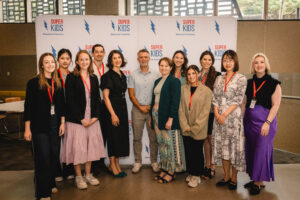

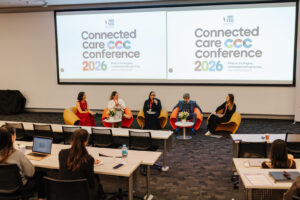
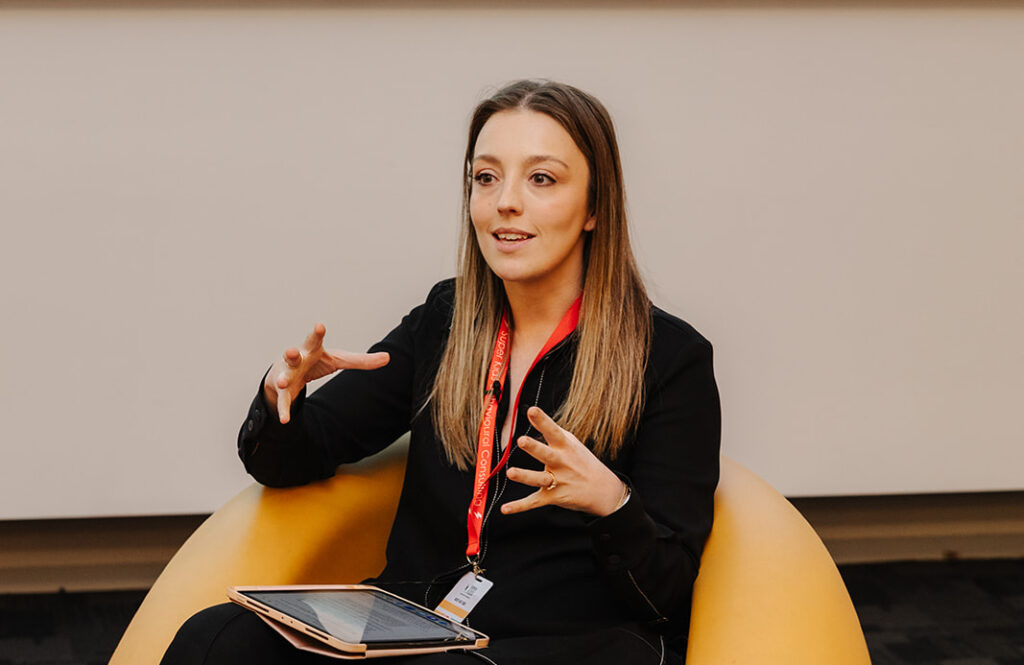
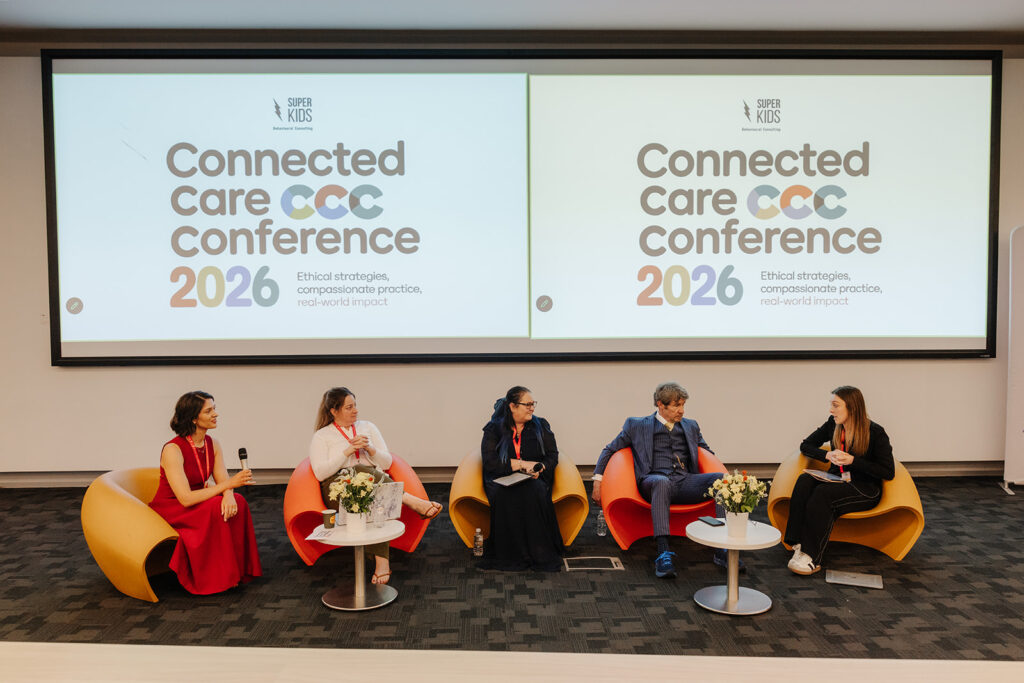
One of the most anticipated sessions of the Connected Care Conference 2026 was a live panel discussion that brought together four clinicians whose careers span behaviour analysis, positive behaviour support, developmental education, and psychology. Moderated by Sophie Carrington, the conversation was honest, wide-ranging, and at times genuinely challenging which was exactly what the conference was designed to produce.
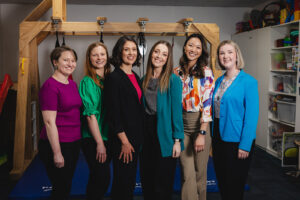
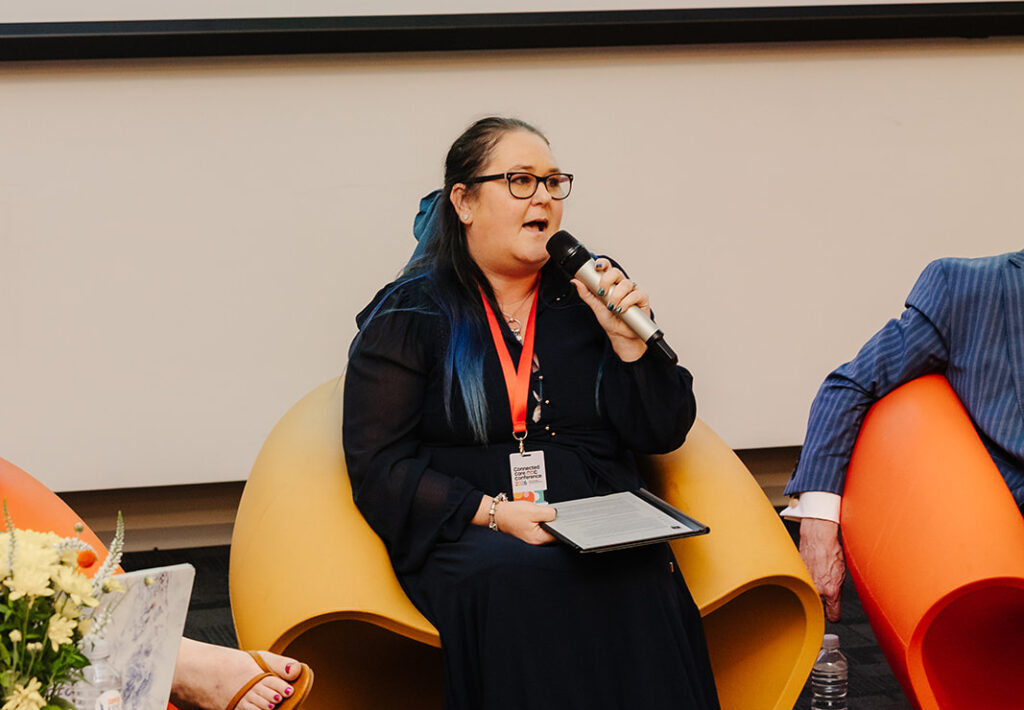
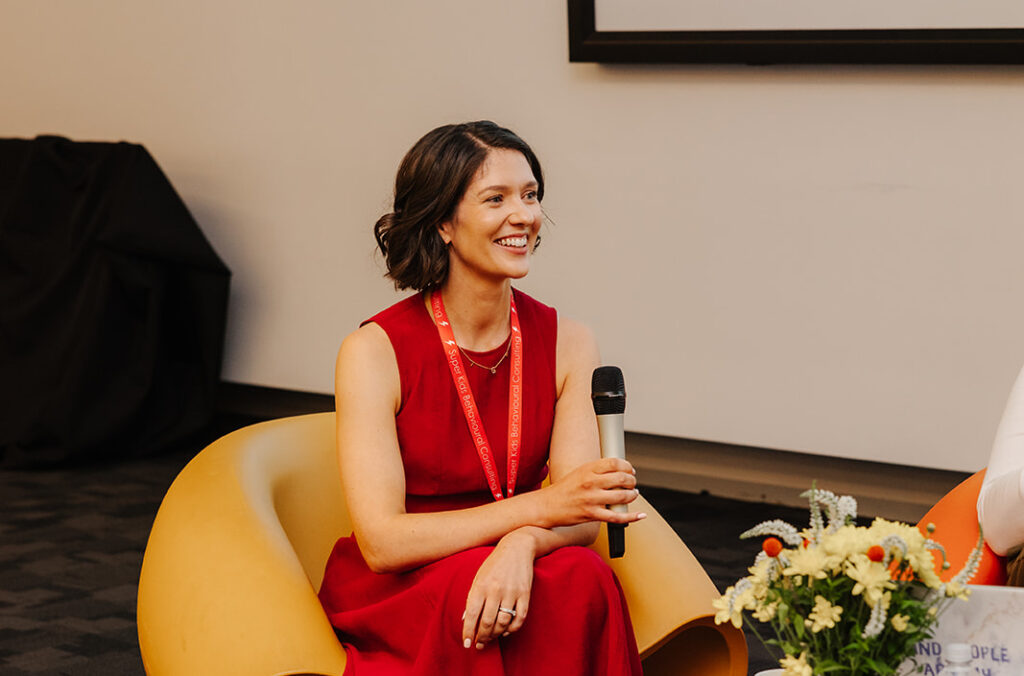
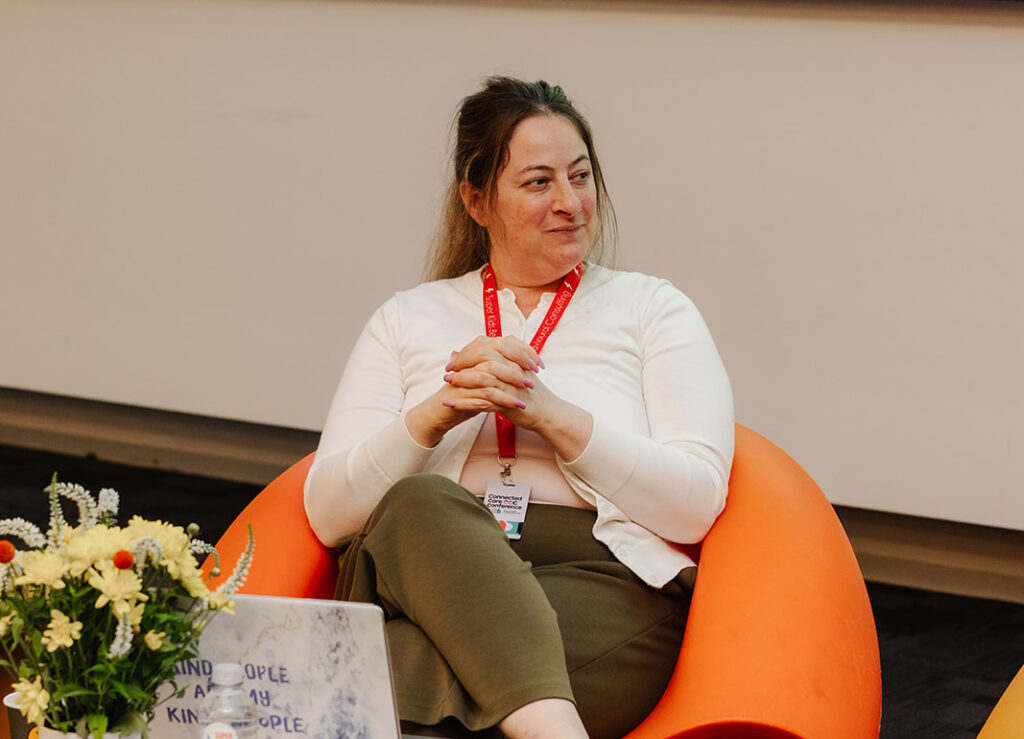
The panellists were Carina Beattie, Developmental Educator and founder of Walking the Journey; Dr Erin Leif, researcher and lecturer at Monash University with expertise at the intersection of ABA and PBS; Renee Collins, BCBA, CBA, and Developmental Educator and founder of Super Kids Behavioural Consulting; and Dr Pat Friman, Director of Behavioural Health at Boys Town and one of the most experienced behaviour analysts in the world.
Here are the key themes that emerged.
The Connected Care Panel
Sophie opened by acknowledging that the panel’s questions came from two directions at once. From practitioners trying to work better together, and from families trying to navigate a system that too often asks them to do the connecting themselves. That framing set the tone: this was not a theoretical discussion about best practice. It was a practical one about what connected, collaborative care actually looks like in the real world, and where it still falls short.
The overarching goal of the weekend and this panel, was to explore how professionals from different disciplines can connect and collaborate more effectively in the best interests of the people they serve.
What Does a Day in the Life of a Developmental Educator (DE) Actually Look Like?
Carina Beattie offered a grounding perspective on the day-to-day reality of being a Developmental Educator, a profession that is often poorly understood by other allied health practitioners. DEs work across the lifespan with individuals with intellectual and developmental disabilities, focusing on functional skills, daily living, community participation, and quality of life. As Carina explained, the DE role sits in a distinctive space: it is neither exclusively therapeutic nor exclusively educational, but deeply practical and person-centred in its orientation.
Understanding each other’s role and value is not a courtesy but it is a clinical necessity. When practitioners don’t know what their colleagues actually do, referrals are poorly timed, duplication is common, and families are left to bridge the gaps themselves.
Why Multiple Certifications and What It Signals
Several panellists reflected on the trend of practitioners holding certifications across multiple disciplines. Renee Collins, who holds credentials as a BCBA, CBA, BSP and Developmental Educator, was asked directly: why collect certifications rather than simply collaborate with others?
There are genuine clinical reasons to develop fluency across frameworks and a deeper understanding of another discipline’s language, values, and decision-making can make collaboration more effective and referral more accurate. But the panel also acknowledged the role of industry pressures: in the Australian disability sector, funding structures and NDIS service categories can drive practitioners to expand scope in ways that may not always serve the primary purpose of connected care.
Dr Pat Friman offered a useful concept here: the ability to wear multiple professional hats acts as a kind of “professional lubricant” as it reduces friction in interdisciplinary settings, because a practitioner who understands multiple frameworks can translate between them, reducing the likelihood of misalignment or professional territorialism.
Referral, Service Fit, and the Courage to Say “Not Me”
One of the most direct themes of the panel was the ethics of referral, specifically, the courage required to tell a family that a different service or clinician would serve them better.
As one panellist noted, finding the right services at the right time is critically important, and should not be a burden that families alone are responsible for managing. This means practitioners must understand each other’s value, know when to refer, and be willing to have honest conversations, including about service fit.
Dr Erin Leif addressed a question that many in the room had been sitting with: when would she recommend ABA versus PBS for a given family or system? Her answer acknowledged genuine differences in emphasis and philosophy between the two approaches, while also recognising the significant overlap in practice. The honest answer is that the right fit depends on the individual, the family’s context, the team around them, and the system they’re operating within. No single framework is always the right answer.
Dr Friman spoke directly to the challenge of having honest, difficult conversations with families. His view, drawn from decades of clinical and supervisory experience, was clear: these conversations require preparation, compassion, and a willingness to prioritise the family’s wellbeing over the professional’s comfort. The ability to do this well is a clinical skill, not just a personal attribute and it can be taught.
Human Rights, ABA, and the PBS Bridge
Dr Erin Leif was asked about a tension that many in the room have encountered: PBS and Developmental Education are widely understood to have a strong human rights foundation, while behaviour analysis has historically received criticism for not sufficiently centring human rights in its practice. How has this affected interdisciplinary connection and collaboration?
Dr Leif’s response engaged the question seriously. The field of behaviour analysis has been on a significant journey particularly when moving toward trauma-informed, neurodiversity-affirming, and rights-based frameworks at a pace that varies considerably across practitioners and settings. The criticism is not unfounded, but it is also not uniform. As she had noted in her own presentation the day before, rights should not be an add-on consideration. They should guide everything we do and serve as the benchmark against which we test our interventions and our decisions.
The panel agreed that as the fields of ABA, PBS, and DE have moved toward more similar philosophies, focusing on dignity, autonomy, and the least restrictive approaches, collaboration has become more possible. But the journey is not complete, and honest acknowledgment of that is itself an act of respect.
When Collaboration Breaks Down
The panel explored what actually gets in the way of effective interdisciplinary collaboration — and the consensus was more nuanced than the usual answer of “funding.”
Funding constraints are real, but the panel identified other, less acknowledged barriers: professionals who don’t know what their colleagues actually do; communication that stays too infrequent or too surface-level even when everyone agrees collaboration matters; the fear of professional disagreement being read as incompetence; and teams that lose sight of the family when navigating professional differences.
One framing that resonated: you can have connection without collaboration, but you cannot have effective collaboration without connection. Building genuine professional relationships, is foundational to everything else.
Families at the Centre
The panel acknowledged something that rarely gets said directly: families of children with disabilities often experience profound isolation and loss of community as they adjust to a new life. Practitioners who work with these families carry a responsibility not only to deliver their individual service, but to actively support connection and community beyond that service. Being committed to establishing and enhancing community adds another dimension to practice that goes beyond what any one discipline can provide.
And when funding ends? The question of how to ensure that loss of paid access to therapy does not mean loss of support or guarantee regression, is one the whole system needs to grapple with more seriously.
Practical Takeaways for Clinicians
The panel closed with direct challenges to every practitioner in the room:
- Ask what your colleagues actually do before assuming you understand their role or scope.
- Be willing to name service fit concerns early and compassionately — and document them if a family isn’t currently in a position to act.
- Build genuine professional relationships, not just referral pipelines.
- Let rights guide your decisions — not as an add-on, but as the foundation.
- Teach collaboration explicitly — don’t assume new clinicians will learn it by observation.
- And perhaps most directly: be brave enough to have the hard conversation at the beginning, rather than waiting until things aren’t working.
Why This Panel Mattered
The Connected Care panel was not a comfortable, back-slapping celebration of interdisciplinary harmony. It was a genuine and sometimes challenging exploration of where professional collaboration succeeds, where it fails, and what it would take to do it better, in the service of the families and individuals who depend on all of us getting it right.
That kind of honesty is exactly what the Connected Care Conference was built to foster. We look forward to continuing the conversation at Connected Care 2027.